
Amazon Associates Disclosure: This review contains affiliate links. If you purchase through our links, we may earn a commission at no additional cost to you. This helps support our blog and allows us to continue providing in-depth product reviews.

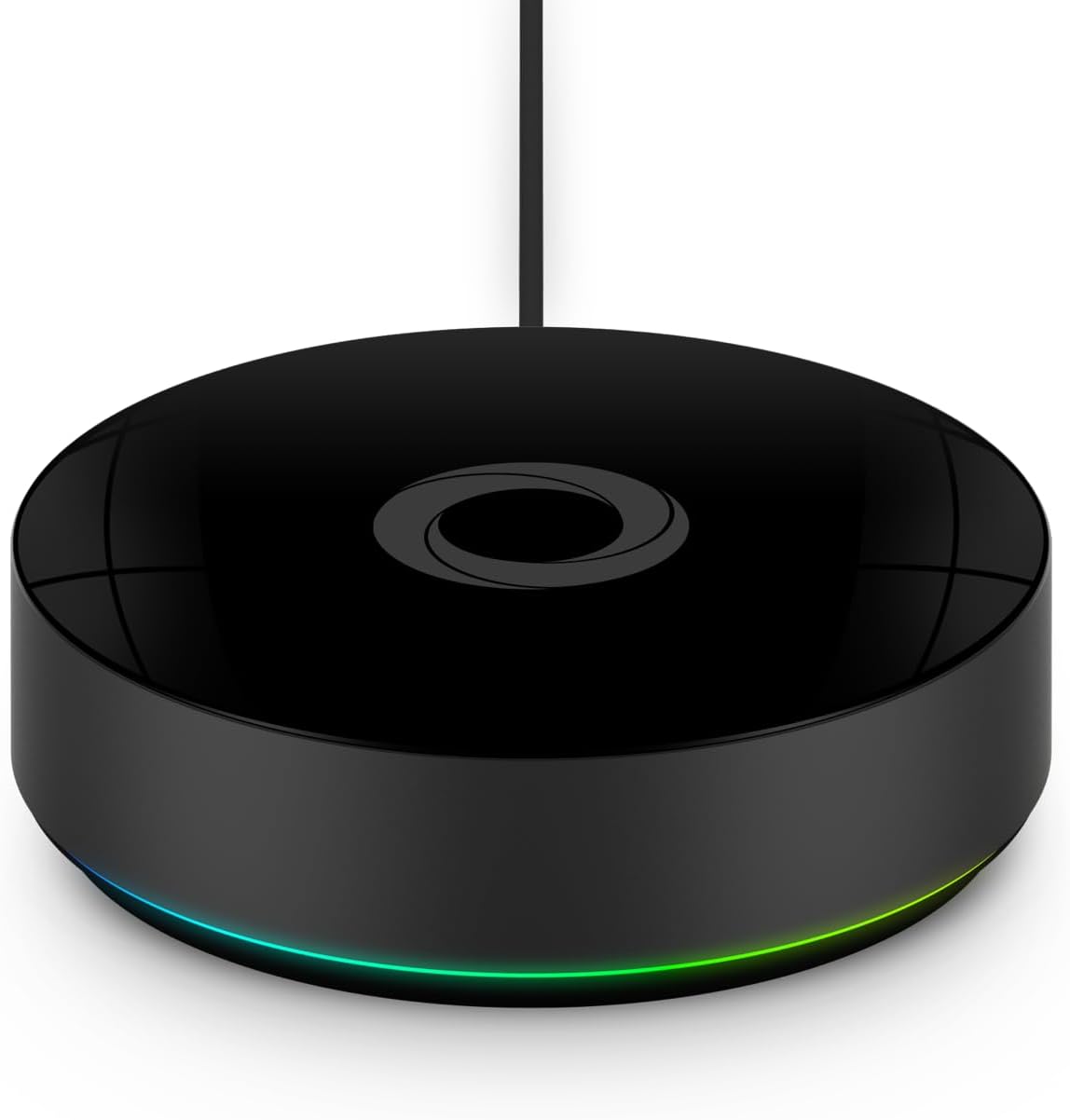
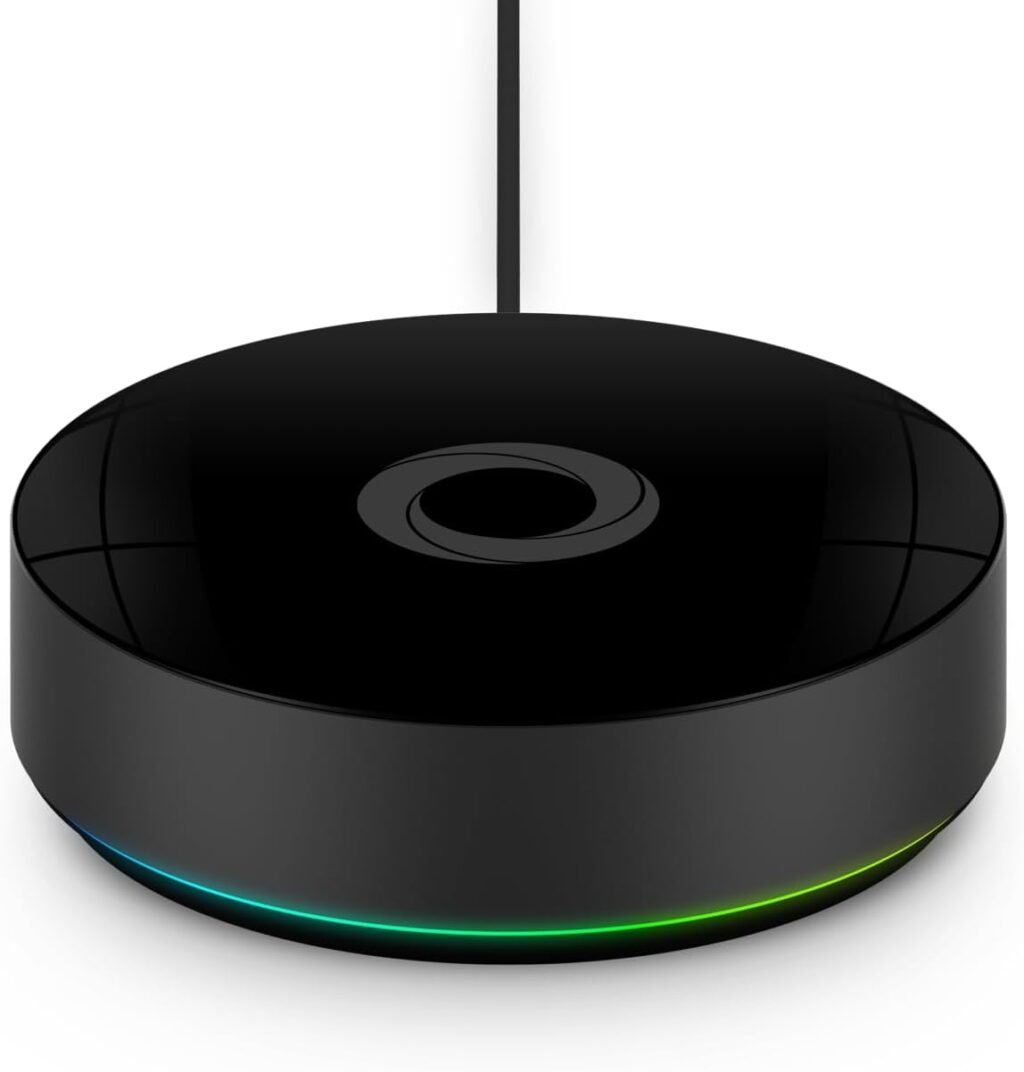
Homey Pro (2026) | Smart Hub for Home Automation – Features Z-Wave Plus, Zigbee, Wi-Fi, BLE, Infrared, Matter & Thread. Compatible with Siri, Alexa & Google Home.

$449.00

Image courtesy of Amazon.com

Introduction
Imagine walking into your home after a long day, and with a simple command or a tap on your phone, your lights adjust to your preferred setting, the thermostat sets the perfect temperature, and your security system arms itself automatically. This is the promise of a truly smart home, but as many homeowners have discovered, achieving this level of seamless automation often means juggling multiple hubs and apps, each with their own limitations and compatibility headaches.
Enter the Homey Pro (2026) | Smart Hub for Home Automation – Features Z-Wave Plus, Zigbee, Wi-Fi, BLE, Infrared, Matter & Thread. Compatible with Siri, Alexa & Google Home. At $449.00, this hub positions itself as the all-in-one solution for integrating the disparate parts of your smart home—no matter which protocol or brand you prefer. It boasts support for virtually every major smart home standard, including the newest industry darling, Matter, and the emerging Thread protocol. With compatibility for voice assistants from all major ecosystems, Homey Pro aims to unify your devices and routines under one intuitive platform.
In this comprehensive review, we’ll share our expert insights on practical daily use, detail the features that set the Homey Pro (2026) apart, and help you decide if this premium hub is the right investment for your smart home needs.
Current price: $449.00 (prices may vary; check Amazon for the latest deals).
Current Price: $449.00
✓ Fast & Free Shipping with Prime | ✓ Easy Returns | ✓ Secure Checkout
Price as of 10/6/2026 – click to check current availability on Amazon
Product Overview & First Impressions
The Homey Pro (2026) is designed as a central command center for the modern smart home. Its primary purpose is to serve as the universal translator and orchestrator for your connected devices, regardless of their underlying technology. Whether you have smart lights on Zigbee, door locks on Z-Wave, sensors on Thread, or legacy devices that rely on infrared signals, Homey Pro claims to bring them all together in one cohesive system.
This product is clearly aimed at the serious smart home enthusiast, tech-savvy homeowners, and even professionals seeking a robust, all-encompassing automation platform. If you’re tired of managing multiple apps or dealing with compatibility gaps, Homey Pro’s promise of unification is compelling. It’s also a great fit for those who want flexibility to experiment with new devices and standards as they emerge—especially with Matter now in the spotlight for cross-brand compatibility.
The packaging of the Homey Pro (2026) reflects its premium status. The box is compact, featuring clean branding and a protective inner layout. Upon opening, you’ll find the hub itself, a power adapter, an Ethernet cable for optional wired connectivity, and a straightforward quick-start guide. The product feels substantial in hand, with a solid construction that inspires confidence.
Setting up the Homey Pro is a user-friendly process. The initial steps involve connecting the device to power, linking it to your Wi-Fi network (or Ethernet if preferred), and downloading the Homey app. The app walks you through pairing your first devices and configuring integrations with popular voice assistants. Our first impressions are that Homey Pro strikes a balance between approachable setup and advanced customization for power users.
Design & Build Quality
From a design perspective, the Homey Pro (2026) sports a modern, understated look. Its compact, rounded form factor is sleek and unobtrusive, making it easy to blend into most home decor styles. The matte finish and subtle LED accent lighting add a touch of sophistication without being distracting.
Materials used in the construction feel premium. The outer shell is composed of sturdy plastic with a quality texture, and the device has enough weight to sit securely on a shelf or table. There are no creaky panels or loose parts—everything fits together with precision, which is reassuring for a device intended to be the backbone of your home automation system.
In terms of size and portability, the Homey Pro is smaller than many traditional routers or home hubs. It’s easy to find a discreet spot for it near your router, entertainment center, or even on a bookshelf. The lack of large antennas or flashy branding means it won’t draw unwanted attention.
Ergonomically, there’s little you’ll need to interact with on the device itself—the included app is your main interface. Ventilation appears adequate, and the hub runs cool and quiet. Overall, the build quality suggests durability for years of 24/7 operation, which is crucial for a smart home controller.
Key Features & Specifications
The Homey Pro (2026) is loaded with features designed to offer maximum flexibility and future-proofing. Let’s break down the key technologies and their practical advantages:
- Z-Wave Plus: One of the most popular mesh networking protocols for smart home devices, Z-Wave Plus ensures reliable communication with door locks, sensors, switches, and more. Homey Pro supports the latest Z-Wave standard, enabling extended range and better energy efficiency.
- Zigbee: Many popular brands, including Philips Hue and IKEA, use Zigbee for their smart lighting and devices. Homey Pro can directly control Zigbee devices, making it ideal for robust, responsive lighting setups.
- Wi-Fi: The hub connects to your home network via Wi-Fi, granting access to cloud-enabled devices and services. This means you can integrate smart speakers, cameras, and other Wi-Fi based devices in your routines.
- Bluetooth Low Energy (BLE): BLE support expands compatibility to fitness trackers, presence sensors, and select smart locks or lighting systems.
- Infrared: A standout feature, the built-in infrared blaster allows Homey Pro to control legacy devices—like TV remotes, AC units, and audio receivers—that aren’t otherwise “smart.” This bridges the gap between old and new tech in your home.
- Matter & Thread: Homey Pro is ready for the future with support for Matter and Thread. Matter promises seamless interoperability across brands and platforms, while Thread offers low-latency, secure mesh networking for next-gen devices.
- Voice Assistant Compatibility: Out of the box, Homey Pro integrates with Siri, Alexa, and Google Home. You can control devices via voice commands or include them in your automated routines, regardless of the ecosystem.
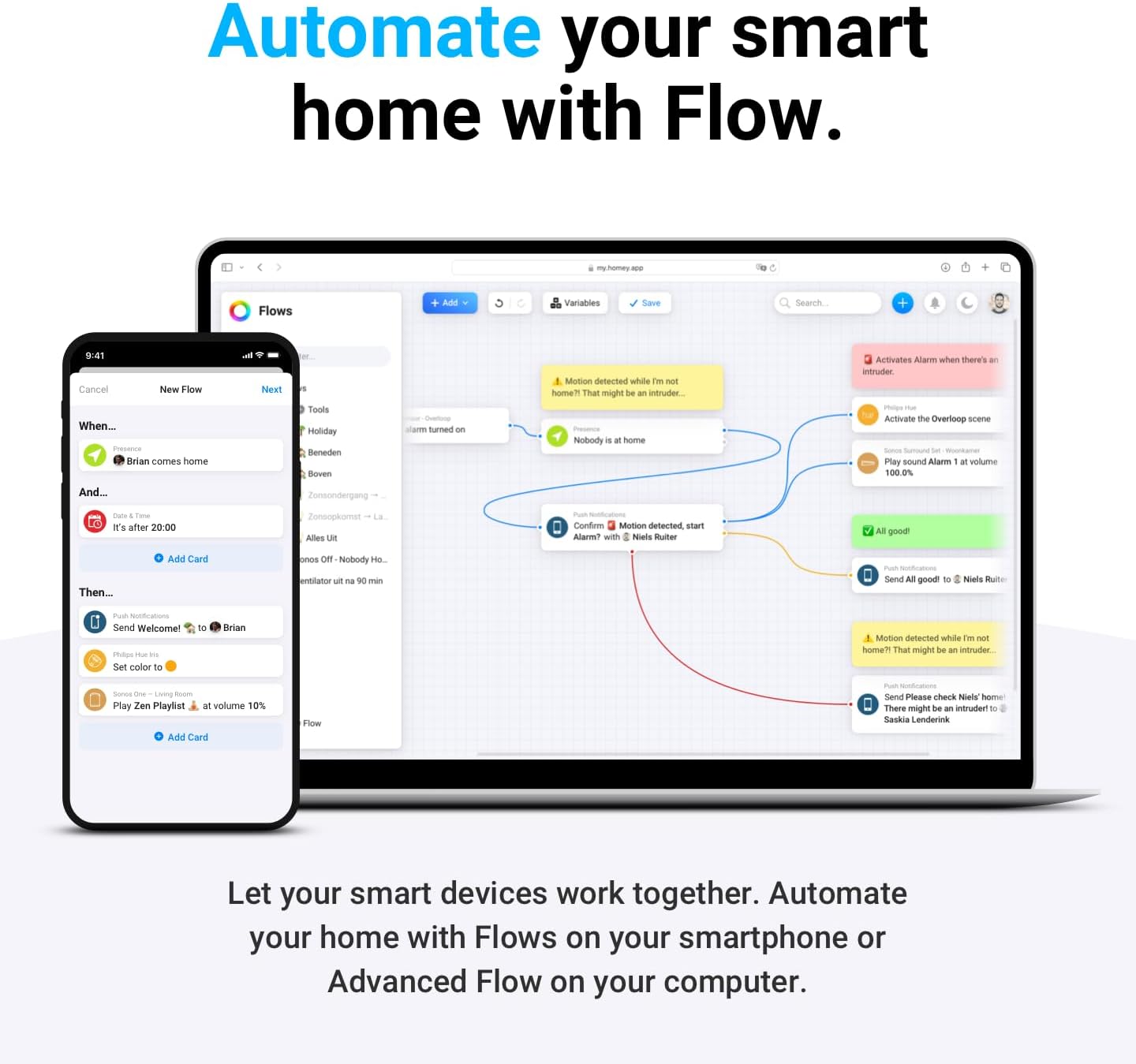
All these protocols are managed through the Homey app, which acts as your command center for device management, automation creation, and remote access. The app’s “flows” system allows you to build complex automations using simple visual logic, empowering both beginners and advanced users to tailor their smart home experience.
Compared to other smart hubs—like Samsung SmartThings, Hubitat Elevation, or Apple HomePod—the Homey Pro stands out for its sheer breadth of protocol support and its commitment to a vendor-neutral, open ecosystem. Where some competitors lock you into their own brands or cloud dependencies, Homey Pro offers remarkable flexibility for those who want to mix and match devices from different manufacturers.
Unique selling points include the built-in IR blaster, full Matter support, and the ability to integrate with all major voice assistants simultaneously. You’re not forced to pick one smart home ecosystem; instead, you can leverage the best from each.
Performance & Real-World Testing
In real-world scenarios, the Homey Pro (2026) proves itself as a robust and responsive hub, capable of managing even the most complex smart home setups. We’ll walk you through several practical daily use cases to illustrate how this all-in-one controller performs.
Lighting Control: Imagine you have a mix of Philips Hue bulbs (Zigbee), some Z-Wave wall switches, and a few Wi-Fi smart plugs. With Homey Pro, all these devices appear in a unified dashboard. You can create a “Good Night” routine that dims your Hue bulbs, turns off all Z-Wave switches, and powers down Wi-Fi plugs with a single tap or voice command. The latency between command and action is minimal—lights respond almost instantly, and the system rarely misses a beat.
Security Automation: For those with a smart security system, Homey Pro’s compatibility is a major asset. You can link Z-Wave door/window sensors, Zigbee motion detectors, and even integrate your Wi-Fi cameras into one automation. For example, if a sensor detects activity after dark, Homey can automatically turn on exterior lights, record a camera snapshot, and send a notification to your phone—all triggered by a single event. This level of integration is difficult to achieve with less versatile hubs.
Legacy Device Integration: The infrared blaster is a game-changer for homes with older devices. You can automate your TV, sound system, or air conditioner, scheduling them to turn on when you arrive home or off when you leave, all without needing a separate remote or hub for each appliance.
Voice Control: Whether you prefer Alexa, Google Assistant, or Siri, Homey Pro natively supports all three. You can ask Siri to turn on your Zigbee lights, use Alexa to lock your Z-Wave door, or control your entire home with Google routines. The flexibility is unmatched, and you’re not locked into a single voice assistant ecosystem.
Routine Management and Automation: The Homey “flows” system makes automation easy and powerful. You can set up triggers based on time, device status, user presence, or even weather. For example, you might have a morning routine that gradually brightens the lights, starts your coffee maker (via a smart plug), and plays your favorite playlist—all orchestrated via Homey.
Throughout daily use, the hub remains stable and responsive. Device discovery is quick, and the app provides clear feedback when actions are triggered. For larger setups, Homey Pro’s hardware is robust enough to handle dozens of devices without lag or crashes.
Long-term, the inclusion of Matter and Thread support means you’re investing in a hub that will adapt as new devices and standards emerge, protecting your investment and simplifying future upgrades.
Current Price: $449.00
🛒 View Full Specifications on Amazon
✓ Fast & Free Shipping with Prime | ✓ Easy Returns | ✓ Secure Checkout
Price as of 10/6/2026 – click to check current availability on Amazon
User Experience & Ease of Use
One of Homey Pro’s strengths lies in its user experience. The initial setup process is streamlined, with the Homey app guiding you step-by-step through device pairing and voice assistant integration. Even if you’re new to smart home tech, the instructions are clear and jargon-free.
The “flows” automation builder is a standout feature. It uses a visual block-based interface, so you can create routines without any coding. For example, you can simply drag-and-drop to create a flow like: “If motion is detected in the hallway after 10 PM, turn on the lights at 30% brightness.” This approach is far more intuitive than the scripting or rule-based systems found on some competing hubs.
For advanced users, there’s support for more complex logic, including device variables, webhooks, and external integrations. The app’s interface is polished, with easy access to all devices, flows, and settings. Remote access is built-in, allowing you to monitor or control your home from anywhere via your smartphone.
Maintenance is minimal—firmware updates are delivered over-the-air, and the system is designed for 24/7 uptime. The Homey community is active, providing user-created apps and support for a wide range of devices. In terms of customer support, Homey has a solid reputation for responsiveness and helpful service, which is vital for a mission-critical device like this.
Common user feedback highlights the app’s ease of use, the reliability of automations, and the freedom to mix devices across brands. Some users note that the sheer number of options can feel overwhelming at first, but most find the learning curve manageable thanks to the app’s well-organized layout and helpful onboarding guides.
Comparison with Alternatives
The smart home hub market is crowded, with strong options from brands like Samsung (SmartThings), Hubitat, Apple, and even dedicated voice assistant hubs like Amazon Echo and Google Nest Hub. So how does the Homey Pro (2026) compare?
- Samsung SmartThings: Known for ease of use and broad compatibility, but relies heavily on cloud processing. Lacks built-in infrared and advanced local automation seen in Homey Pro.
- Hubitat Elevation: A favorite among enthusiasts for its local processing and customization, but has a steeper learning curve and less polished interface compared to Homey Pro.
- Apple HomePod/HomeKit: Seamless for iOS users, but limited in supported protocols (mainly Wi-Fi, Thread, and select Zigbee/Matter devices). No Z-Wave or IR support.
- Amazon Echo/Google Nest Hub: Great for voice control, but not a true hub for advanced automation or multi-protocol support. Limited in device compatibility and automation flexibility.
What sets Homey Pro apart is its true multi-protocol support (Z-Wave Plus, Zigbee, Wi-Fi, BLE, IR, Matter, Thread), its vendor-agnostic platform, and its ability to bring together all major voice assistants. For power users and those with a diverse set of devices, Homey Pro offers more flexibility and future-proofing than most competitors.
At $449.00, it is priced above most mass-market hubs, but it justifies this premium by eliminating the need for multiple bridges or controllers. If you value versatility, local control, and a unified app experience, Homey Pro delivers a compelling value proposition.
Detailed Pros and Cons
Pros
- Unmatched Protocol Support: Integrates Z-Wave Plus, Zigbee, Wi-Fi, BLE, IR, Matter, and Thread—covering virtually all smart home devices.
- Vendor-Agnostic Platform: Works with devices from hundreds of brands, giving users freedom to choose best-in-class products.
- Built-In Infrared Blaster: Controls legacy devices like TVs, air conditioners, and audio receivers, bridging past and present tech.
- Advanced Automation: Visual “flows” system makes it easy to build complex routines, suitable for both beginners and experts.
- Multi-Assistant Compatibility: Native support for Siri, Alexa, and Google Assistant—no need to pick a single ecosystem.
- Future-Proof with Matter and Thread: Ensures compatibility with next-generation devices and standards.
- Polished App Experience: Intuitive interface with remote access, device management, and automation controls.
- Reliable Local Processing: Many automations run locally for speed and privacy, reducing reliance on cloud services.
Cons
- Premium Price: At $449.00, it’s significantly more expensive than most mainstream hubs.
- Initial Learning Curve: The sheer range of options and integrations can be overwhelming for newcomers.
- Some Device/App Gaps: Although compatibility is broad, a few niche devices may require manual setup or aren’t fully supported (as is true for all hubs).
- Limited Local Voice Control: Voice assistants require internet connectivity, so full local, offline voice control is not available.
- Occasional Firmware Updates: As a rapidly evolving platform, periodic updates may introduce temporary bugs or require troubleshooting.
For most users, the pros far outweigh the cons, but those on a tighter budget or with simpler needs may find more affordable alternatives sufficient.
Who Should Buy This?
The Homey Pro (2026) is best suited for users who:
- Want to unify a diverse set of smart home devices across multiple brands and protocols.
- Have invested in both legacy (IR-based) and modern (Matter, Thread, Zigbee, Z-Wave) devices.
- Value flexibility and the ability to create complex, customized routines.
- Prefer not to be locked into a single voice assistant or ecosystem.
- Are planning to future-proof their smart home for upcoming standards and devices.
- Need reliable local processing for privacy and speed.
It may not be the best fit for:
- Casual users with only a handful of Wi-Fi-based devices who don’t need advanced automation.
- Tech novices overwhelmed by too many options or those who prefer a “set it and forget it” approach.
- Buyers on a strict budget who can achieve their goals with a basic, single-protocol hub.
For those who demand the ultimate in control and interoperability, however, Homey Pro (2026) is hard to beat.
Value for Money & Final Verdict
At $449.00, the Homey Pro (2026) is a significant investment, but it’s priced fairly for what it offers. Instead of buying separate hubs for Z-Wave, Zigbee, IR, or future-proofing for Matter and Thread, you get an all-in-one platform that truly unifies your smart home. For advanced users, power users, and anyone committed to building a versatile, future-ready ecosystem, the value proposition is strong.
Long-term, investing in Homey Pro means fewer headaches as new devices and protocols emerge. The robust hardware, active community, and responsive support provide peace of mind that your smart home will remain reliable for years to come.
While the upfront price may be overkill for simple setups, for those with even moderate smart home ambitions—or anyone tired of managing a patchwork of bridges and apps—Homey Pro delivers convenience, flexibility, and power in a single, elegant package.
In summary, if you want the best multi-protocol, vendor-neutral smart home hub available in 2026, the Homey Pro is an outstanding choice. It delivers on its promises and sets the bar for what a unified smart home platform should be.
Check Amazon for the latest pricing and availability before purchasing, as deals and stock may change.
Current Price: $449.00
🛒 Get the Best Price on Amazon
✓ Fast & Free Shipping with Prime | ✓ Easy Returns | ✓ Secure Checkout
Price as of 10/6/2026 – click to check current availability on Amazon

More Stories
Chamberlain Smart Garage Door Opener RJO20 Review: Ultra Quiet Wall Mount, myQ App, and Space-Saving…
Kasa Smart Light Switch HS200 Review: Ultimate Wi-Fi Lighting Control for Smart Homes in 2026 – Worth $10.95?
Kasa Smart Plug Mini 15A EP25P2 Review: Ultimate Smart Home Outlet with Apple HomeKit & Voice Control for 2026